
When Custom Software Beats Off-the-Shelf Tools
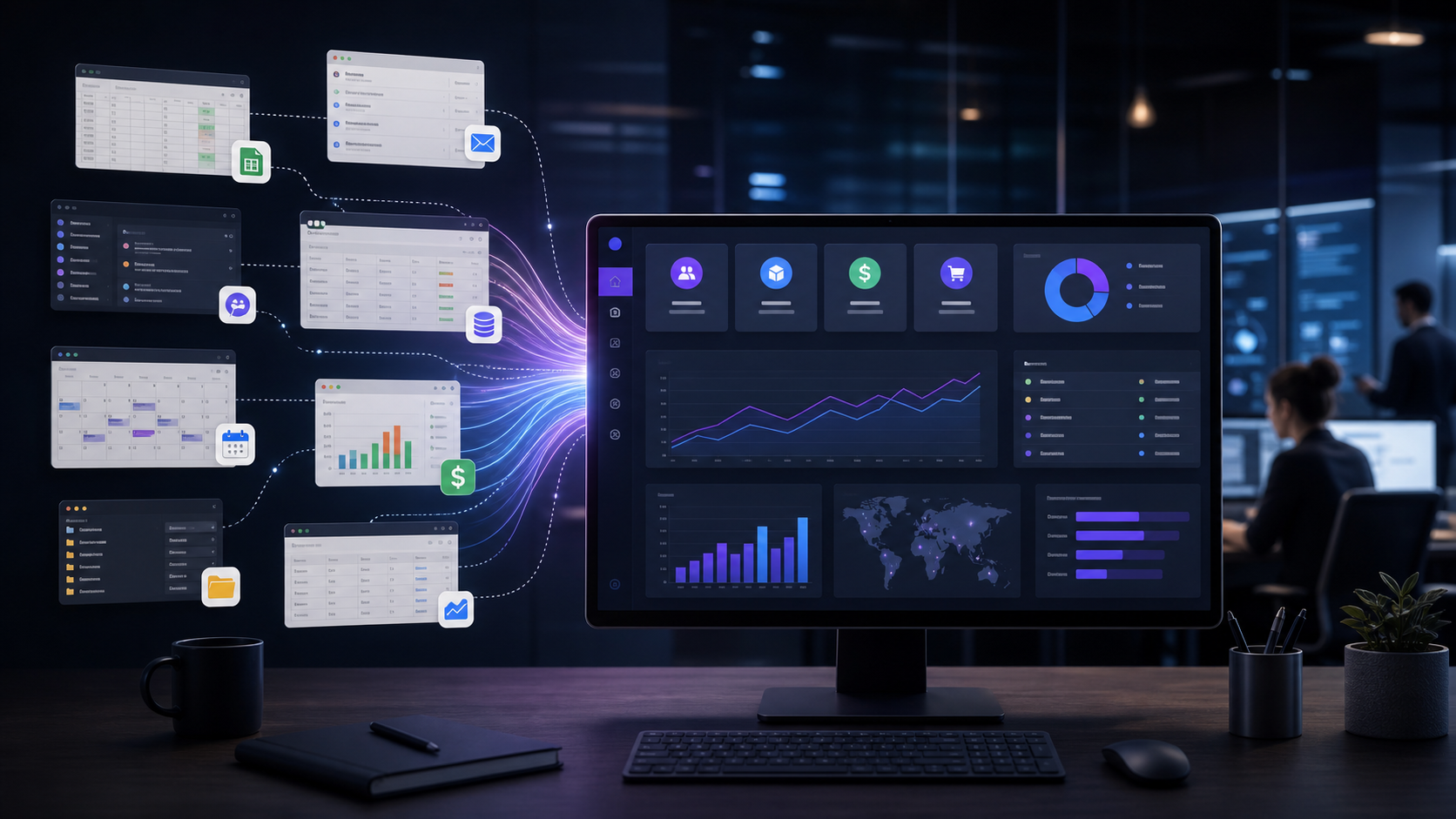
Off-the-shelf software is usually the right starting point. It is faster, cheaper, and easier to validate than building something custom. A business should not commission custom software just because a generic tool feels imperfect.
Custom software starts to make sense when the business is spending too much time adapting to tools instead of using tools that fit the workflow. The clearest signal is operational drag: repeated manual work, duplicate data entry, scattered reporting, broken handoffs, and staff creating workarounds around software that was supposed to help.
Signs you have outgrown generic tools
- Your team copies the same data between systems every week.
- Critical work depends on spreadsheets nobody fully trusts.
- Multiple subscriptions overlap, but none of them match the workflow.
- Reporting takes hours because data is scattered across platforms.
- Customers or staff keep hitting the same manual bottleneck.
- Important business rules live in someone's memory instead of the system.
What custom software should do
A custom system should reduce friction, centralize important data, automate repeatable work, and make the business easier to operate. It should not be a novelty project or a copy of software that already exists.
Good custom software usually connects tools, enforces process, improves visibility, and removes repetitive decisions. That might mean a dashboard, portal, quoting workflow, inventory system, API integration, mobile field app, or reporting layer. The shape depends on the operational problem.
When off-the-shelf is still better
If a standard tool covers most of the workflow and the team can adapt without major cost, buying is usually better than building. This is especially true for accounting, payroll, email marketing, common CRM needs, and commodity project management workflows.
Custom work becomes more attractive when the business model, customer experience, compliance need, or internal process is specific enough that generic software creates ongoing cost. The question is not "can this be built?" The question is "does building it remove enough friction to justify ownership?"
How to reduce risk
Start with a focused first release. Build the smallest version that solves the core workflow, then expand based on real use. Good custom software grows from operations, not wish lists.
A safe first phase should define users, permissions, core data, must-have integrations, reporting needs, and what happens when something fails. It should also include support expectations after launch. Software is a living system, not a one-time handoff.
Bottom line
Custom software beats off-the-shelf tools when it protects a process that matters to the business. If the current stack creates repeated manual work, unreliable reporting, or customer friction, a focused custom system can pay for itself by making the business easier to run.